




Slide In vs Freestanding Range: Which Should You Get?
As an adult, it is perfectly normal to get totally stoked about buying a new range. With new advances and better technology, upgrading to a new range means you get a chance to have the best of the best.
You do your research to uncover all the cool new features that are available today, like Luxglide telescopic racks that won’t tip when you pull them out, a commercial convection fan for even cooking, and a beautiful stainless steel finish that just screams elegance.
There is just one problem. You see that some ranges are freestanding and others are slide in. What does that even mean? What is the difference? And which one should you get?
Come on - let’s find out.
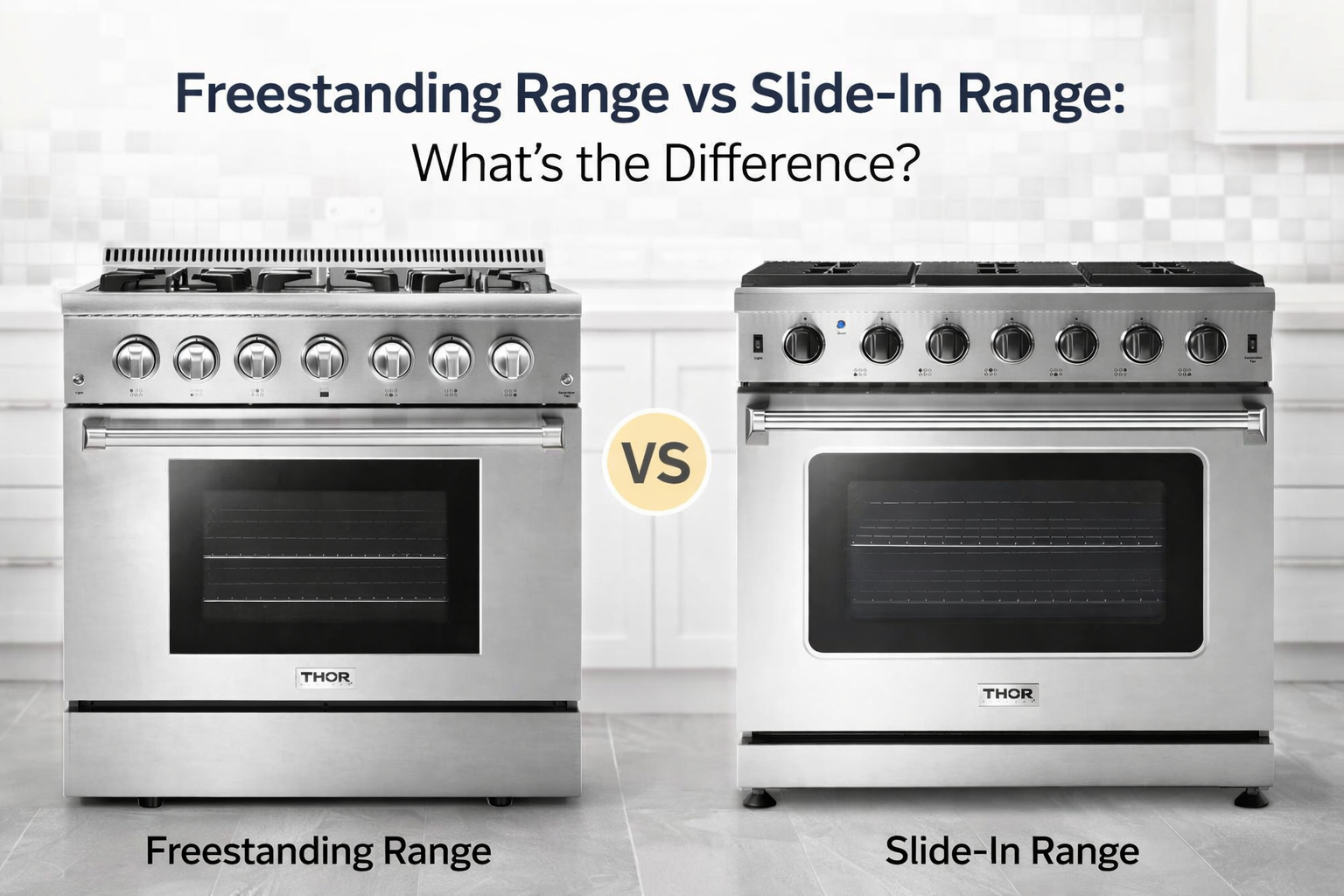
What is a Freestanding Range?
A freestanding range is one that doesn’t require any support on either side. Rather, it can be used as a stand-alone range in one area of your kitchen while your cabinets, countertops, and other appliances are in another area. Or, it may be up against a counter on one side and nothing else on the other. Then again, it could be placed in between countertops.
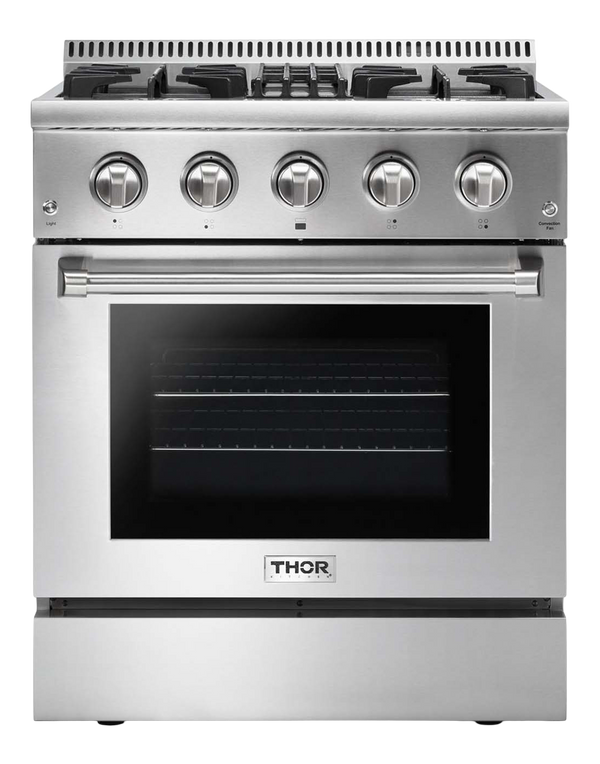
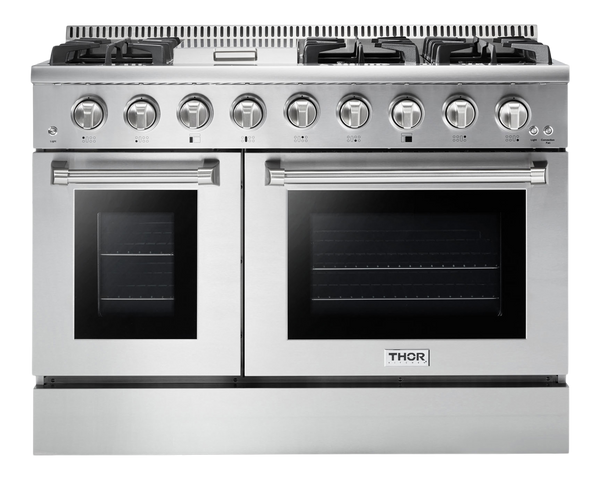
A freestanding range can come in different heating models, including gas, electric, or dual fuel which offers both types. It will have a stovetop built in above an oven (or two). You will have controls, often on a back guard, that will control the oven and the stove so you can enjoy precision cooking at all times.
Think of a freestanding range as a flexible choice. Let’s say that when you invest in a range today, you may have it installed between two countertops. But if you decide to move next year or you decide to remodel your kitchen, how do you know the next space will allow for the unit to be sandwiched?
Something to think about.
Shop Freestanding Range by Thor Kitchen
Why Homeowners Still Prefer Freestanding Ranges
Freestanding ranges remain one of the most widely used options because they solve a very practical problem - uncertainty in kitchen layout. Not every home has a perfectly symmetrical cabinet setup, and not every renovation allows for precision-built appliances.
Because the sides are finished and the design is self-contained, this type of range adapts to your space rather than forcing your space to adapt to it. This becomes especially valuable if:
- You plan to move homes
- You upgrade appliances without remodeling
- Your kitchen layout is asymmetrical
Pros of Freestanding Ranges
- Flexible placement - Can be installed anywhere, even at the end of cabinets
- Finished sides - Looks complete from all angles
- Typically more affordable - Great value for budget-conscious upgrades
- Backguard controls - Protects wall from splatters and heat
- Easy replacement - Fits into most existing kitchen layouts
Cons of Freestanding Ranges
- Less seamless look compared to built-in styles
- Gaps between counters can collect grease and debris
- Design is more traditional vs modern
What is a Slide In Range?
A slide-in range is a little different. While it will give you the same traits as a freestanding range, such as the stovetop over the oven, it can’t just be installed anywhere as it is not designed with finished sides.
Slide-in ranges are made to be installed in between two cabinets for a clean, seamless look. They are becoming more and more popular due to their contemporary style - and are seen as an upgrade from traditional freestyle ranges.
The side panels on a slide-in range do not have the finish that you would place out in the open in your kitchen. Plus, these ranges are designed a little differently. While they may have controls on a back guard, this isn’t customary for this type. Instead, they are often located on the top or on the front of the unit.
Slide-in ranges often fit nicely within the countertops and have sides that prevent food from falling or spilling between the unit and its respective cabinet.
The major difference between the two ranges is the manner in which it is installed.
Shop Slide-In Range by Thor Kitchen


Why Slide-In Ranges Are Considered an Upgrade
Slide-in ranges are not necessarily more powerful - but they are more design-focused. They are built for kitchens where appearance, flow, and seamless integration matter just as much as performance.
By sitting flush with countertops, they create a continuous surface that feels more premium and custom-built. This is especially important in open kitchens where appliances are part of the visual experience.
Pros of Slid-In Ranges
- Seamless, built-in look with cabinetry
- Front or top controls for a modern feel
- Better spill containment with edge-to-edge cooktops
- Elevated kitchen aesthetics
Cons of Slid-In Ranges
- Requires precise installation between cabinets
- Unfinished sides limit placement flexibility
- Usually higher cost
- May need countertop adjustments
What are the key differences between freestanding, slide-in?
| Feature | Freestanding Range | Slide-In Range |
|---|---|---|
| Installation Type | Can be installed anywhere - between cabinets, at the end of a counter, or standalone. No strict fitting required. | Must be installed between two cabinets with precise measurements for a built-in look. |
| Placement Flexibility | Highly flexible; suitable for almost any kitchen layout or future relocation. | Limited flexibility; requires a fixed, planned cabinet space. |
| Side Panels | Finished sides allow visible placement without affecting aesthetics. | Unfinished sides; must be enclosed between cabinets or panels. |
| Design & Appearance | Traditional look with visible edges and usually a backguard. | Sleek, modern, built-in appearance with seamless countertop integration. |
| Control Panel Location | Typically located on a backguard, keeping controls away from cooking surface. | Usually front-mounted or top-front, offering easy access while cooking. |
| Backguard Presence | Yes, includes a back panel that protects the wall and houses controls. | No backguard; allows full visibility of backsplash or wall design. |
| Ease of Installation | Simple and quick installation; ideal for replacements. | Requires precise alignment, professional installation often needed. |
| Countertop Fit | May leave small gaps between the appliance and countertops. | Designed to sit flush with countertops, eliminating visible gaps. |
| Cleaning & Maintenance | Side gaps can collect grease, crumbs, and debris over time. | Easier to clean due to minimal gaps and better spill containment. |
| Spill Management | Spills can fall between gaps if installed between cabinets. | Edges are designed to prevent spills from dripping into gaps. |
| Cost (Appliance) | Generally more affordable across most models. | Typically priced higher due to premium design. |
| Installation Cost | Lower; minimal or no modification required. | Higher; may require cabinet or countertop adjustments. |
| Kitchen Compatibility | Works well in older kitchens, rentals, or uneven layouts. | Best suited for modern kitchens, remodels, and custom cabinetry. |
| Long-Term Flexibility | Easy to move or reinstall in a different kitchen setup. | More permanent; tied to specific cabinet configuration. |
Can a slide-in range replace a freestanding range?
This is one of the most common questions - and the answer is yes, but with conditions.
A slide-in range can replace a freestanding range only if your kitchen layout supports it. Since slide-in models require a precise fit between cabinets, you may need to adjust countertop edges or add filler strips to close any gaps.
In many cases, homeowners underestimate this step. While the width may match, the depth, counter height, and back clearance also play a role.
So, while it is technically possible, it is not always a direct swap.
So, Which Range is Better?
Both the freestanding and the slide-in range bring the ability to cook a feast into your kitchen. And, generally speaking, they are quite similar. A lot of their differences come down to how they are designed for installation and the layout of your space.
To find out which one reigns supreme, we need to take a closer look.
Functionality
These ranges function about the same. Each manufacturer, of course, will design the range how they believe it to be best. For instance, one may have a wider range in BTU for burners, another may offer the addition of a griddle on the stove top, and so on.
Either range can function well and have different features. It all comes down to who designs it - not because it is either freestanding or slide-in.
Installation
One of the biggest differences between these two range options is how it is installed. Remember, a freestanding range can go anywhere in your kitchen whereas a slide-in range will need to be between two countertops.
The sides of a freestanding range are finished which gives you a lot more options.
Layout
The layout of your kitchen is going to greatly impact which type of range is the best for you. You want to make sure that your kitchen flows. That way, when you are cooking, you can move easily from the refrigerator to the sink to the prep area and to the range. Depending on your kitchen, this may mean having a range between the countertops or on the end.
If you are replacing your current range, you may have to use the space you already have available - especially if the range was in between the counter. But, if you are remodeling your kitchen, then you get to choose where you want your range to go - and ultimately choose whether you want a freestanding or a slide-in range.
It is important to remember that both types of ranges can be installed between two countertops - or a wall and a countertop.
Features
There are many different features available on ranges today - and some may be more important to you than others. You should be looking for those that enhance your experience, making cooking and cleanup easy.
Both slide-in and freestyle ranges offer these features so know before you shop so you get just what you are looking for.
It’s a Draw
Both a freestanding and a slide-in range can give you great features and functionality. Choosing the best option will come down to flexibility in installation and layout. It is pretty safe to say that both ranges take (err… bake) the cake when it comes to their competition.
A freestyle range can blend in or it can stand out. It can look beautifully flush between two countertops or a freestyle range can hold its own without anything around it. Yet, a slide-in range looks sleek and stylish built into the cabinetry.
It doesn’t matter whether you are remodeling your kitchen, starting from scratch, or simply replacing your range - it is always good to choose the one that will work well for you for years to come.
Thor Kitchen has both options.
Frequently Asked Questions (FAQs)
-
What is the main difference between a freestanding and a slide-in range?
The main difference between a freestanding and a slide-in range is how they are designed to be installed. A freestanding range has finished sides and can be placed anywhere in the kitchen, making it highly flexible. A slide-in range, on the other hand, is designed to fit between cabinets for a built-in, seamless look and does not have finished sides. While both offer similar cooking performance, the choice depends on your kitchen layout and design preference. -
Which is better: freestanding or slide-in range?
Neither is universally better - it depends on your needs. Freestanding ranges are better for flexibility, affordability, and easy replacement. Slide-in ranges are better for modern kitchens where a sleek, built-in appearance is important. Brands like Thor Kitchen offer high performance in both types, so the decision is more about design and installation rather than cooking capability. -
Can I replace a freestanding range with a slide-in range?
Yes, you can replace a freestanding range with a slide-in range, but it may require modifications. Slide-in ranges need precise cabinet spacing and proper countertop alignment. In some cases, you may need to adjust countertops or add filler panels to ensure a proper fit. -
Do slide-in ranges perform better than freestanding ranges?
No, slide-in ranges do not inherently perform better than freestanding ranges. Cooking performance depends on the features and engineering of the appliance, not the installation type. For example, Thor Kitchen offers powerful burners, convection cooking, and durable construction in both freestanding and slide-in models. -
Why are slide-in ranges more expensive?
Slide-in ranges are typically more expensive because of their design and installation requirements. They are built to integrate seamlessly with cabinetry, often featuring front controls and a more refined finish. Additionally, installation may require adjustments to your kitchen, which can increase the overall cost. -
Are slide-in ranges harder to install?
Yes, slide-in ranges are generally harder to install compared to freestanding ranges. They require precise measurements and must fit exactly between cabinets. Any variation in width, depth, or countertop height can create installation challenges. -
Do freestanding ranges have gaps on the sides?
Freestanding ranges can have small gaps when placed between countertops. These gaps may allow food particles and grease to fall between the appliance and cabinets. However, because they have finished sides, they can also be installed at the end of a counter without affecting appearance. -
Which range is easier to clean?
Slide-in ranges are typically easier to clean because they are designed to fit flush with countertops, reducing gaps where debris can collect. Freestanding ranges may require more frequent cleaning around the sides if installed between cabinets. -
Are Thor Kitchen ranges good quality?
Yes, Thor Kitchen ranges are known for their commercial-style design, stainless steel construction, and high-performance burners. They offer features like convection cooking, continuous grates, and durable components, making them a strong choice for both home cooks and serious users. -
What should I consider before choosing a range?
Before choosing between a freestanding and a slide-in range, consider your kitchen layout, installation space, budget, and design preference. If you need flexibility and easy installation, a freestanding range is ideal. If you want a seamless, built-in look and are planning a remodel, a slide-in range may be the better option.


