
Article: Compact Wine Fridges: Smart Storage Solutions for Small Kitchens and Apartments
Compact Wine Fridges: Smart Storage Solutions for Small Kitchens and Apartments
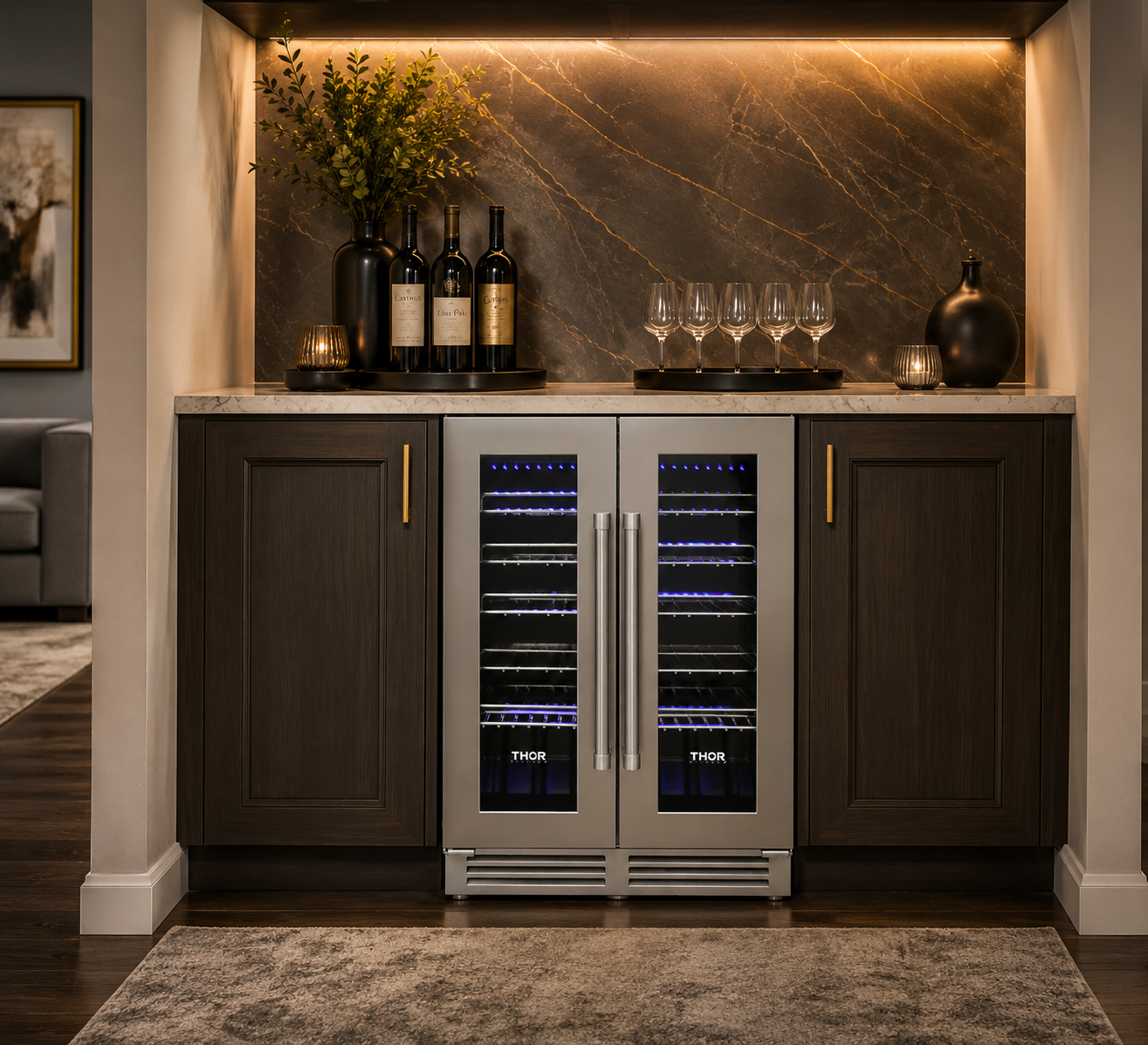
Space is often the biggest challenge in modern homes. Whether you're living in an apartment, condo, townhome, or simply working with a smaller kitchen footprint, finding room for specialty appliances can feel difficult. However, you can still choose compact appliances such as wine coolers that can be placed beneath the countertop or slid into home bars or dining areas depending on the space available. Many people store wine bottles in a standard refrigerator. While this may seem convenient at first, problems, such as temperature fluctuation, dried up corks, and more begin to show up and wine quality starts to suffer. A compact wine fridge solves these issues without taking over your kitchen. Today's compact wine coolers offer precise temperature control, quiet operation, stylish finishes, and flexible installation options. This post explores the best compact wine fridges by category, explains how to choose the right size, compares built-in and freestanding models, and highlights the features that matter most.
Why Compact Wine Fridges Are Trending
By combining proper wine preservation with a small footprint, compact wine fridges help address both storage limitations and quality concerns. This makes them well-suited to today's living environments and a practical solution for compact kitchens in modern homes.
-
Growing Demand for Better Wine Storage: As living spaces become smaller and more efficient, consumers are increasingly looking for practical ways to store wine properly without sacrificing valuable space.
-
Space Constraints: The rise of small-space living has driven demand for compact appliances. Urban apartments and open-layout homes often have limited kitchen space, leaving little room for specialty appliances like full-size wine storage solutions.
-
Increasing Interest in Home Entertaining: Many homeowners are creating dedicated beverage and entertaining areas within their homes. Compact wine fridges provide accessible wine storage without requiring a large footprint, making them suitable for kitchens, dining areas, and home bars.
-
More Flexible Installation Options: Modern compact wine fridges are available in freestanding, built-in, and undercounter configurations. This flexibility allows homeowners to incorporate dedicated wine storage into a wider variety of kitchen layouts and living spaces.
As interest in dedicated wine storage continues to grow, many homeowners begin comparing compact wine fridges with traditional wine cellars to determine which solution best fits their space, collection size, and lifestyle.
Compact Wine Fridges vs. Wine Cellars
While both options are designed to protect wine from temperature fluctuations and improper storage conditions, they serve different storage goals and collection sizes.
-
Storage Capacity: Wine cellars are typically designed to accommodate larger collections, often storing hundreds of bottles. Compact wine fridges are better suited for smaller collections intended for regular access and everyday enjoyment.
-
Long-Term Aging Potential: Dedicated wine cellars are often used for long-term wine aging because they can maintain stable environmental conditions over extended periods. Compact wine fridges are generally intended for preservation, organization, and ready-to-serve storage.
-
Installation Requirements: Wine cellars usually require dedicated space and specialized climate-control considerations. Compact wine fridges are self-contained appliances that can often be integrated into kitchens, home bars, dining areas, or other living spaces.
-
Accessibility and Convenience: Compact wine fridges keep bottles readily accessible for everyday use and entertaining. In contrast, wine cellars are often designed primarily for storage rather than frequent access.
-
Collection Management: Wine cellars may be more appropriate for collectors managing diverse inventories across multiple vintages and aging timelines. Compact wine fridges are often sufficient for households maintaining a curated selection of wines for near-term consumption.
For many homeowners, a compact wine fridge provides dedicated wine storage without the space and infrastructure requirements associated with a traditional wine cellar.
Best Compact Wine Fridges by Category
The right compact wine fridge is defined by available space, collection size, and storage needs. Here are the top options by category:
-
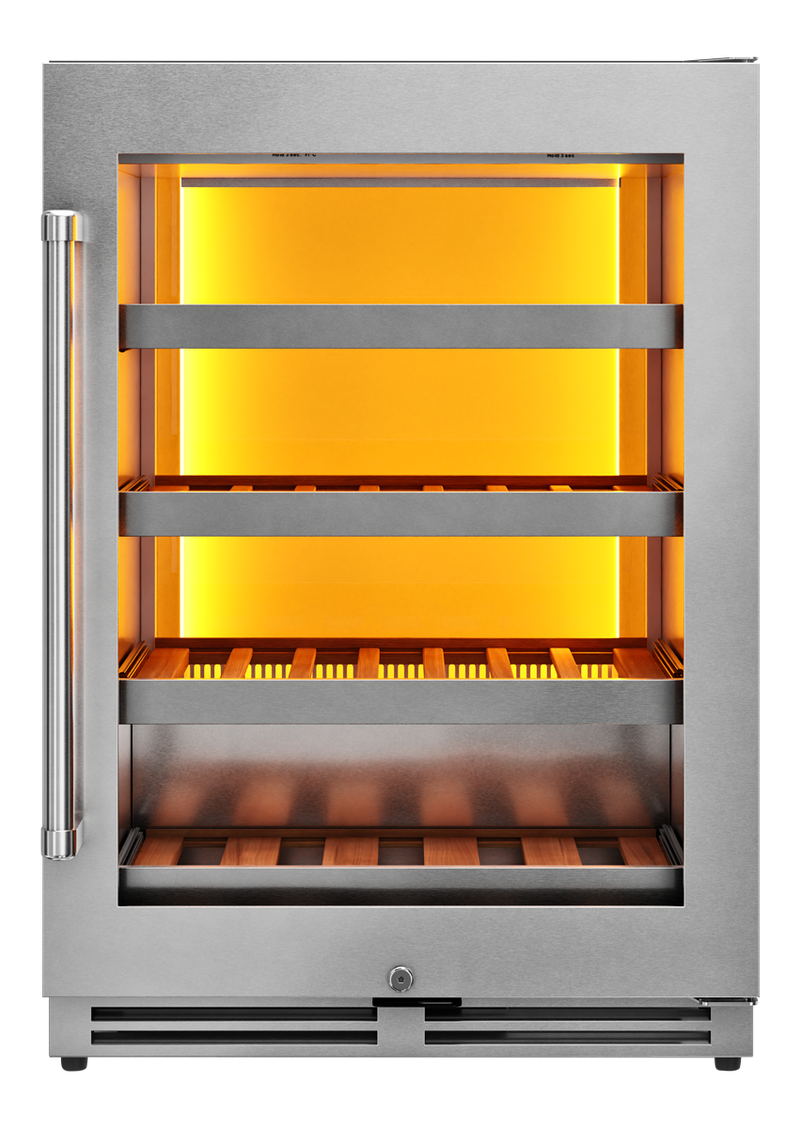
Single-Zone Wine Fridge: These models maintain one consistent temperature throughout the cabinet, making them well suited for homeowners who primarily store either red wines or white wines. They offer straightforward operation and efficient wine preservation for smaller collections. THOR Kitchen offers both 15-inch and 24-inch single-zone options for compact spaces.
-
Dual-Zone Wine Fridge: This type includes two independently controlled temperature zones for storing red and white wines at their ideal temperatures. This flexibility makes them a popular choice for households that store various types of wines.
-
Undercounter Wine Coolers: Designed to fit beneath standard countertops, undercounter wine coolers maximize available kitchen space while keeping bottles easily accessible. Their built-in appearance makes them particularly attractive for modern kitchens and home entertaining areas.
-
Built-In Wine Coolers: Built-in models are designed to integrate seamlessly with surrounding cabinetry, creating a clean and customized appearance. They are often selected during kitchen renovations or new-home projects where appliance integration is a priority.
-
Freestanding Wine Coolers: This is a flexible and compact type that can be placed in kitchens, dining rooms, living areas, or home bars without modifying cabinetry. Also, it can be easily relocated when needed. It is particularly appealing for renters and homeowners who prefer adaptable storage solutions.
-
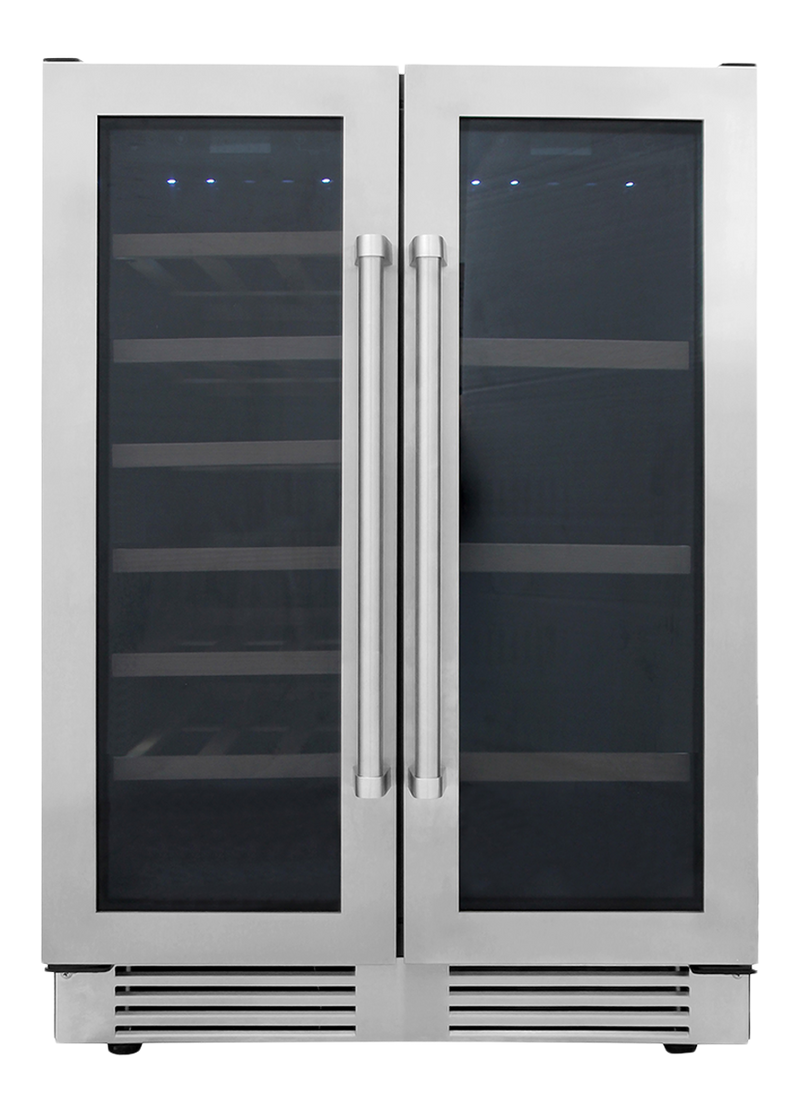
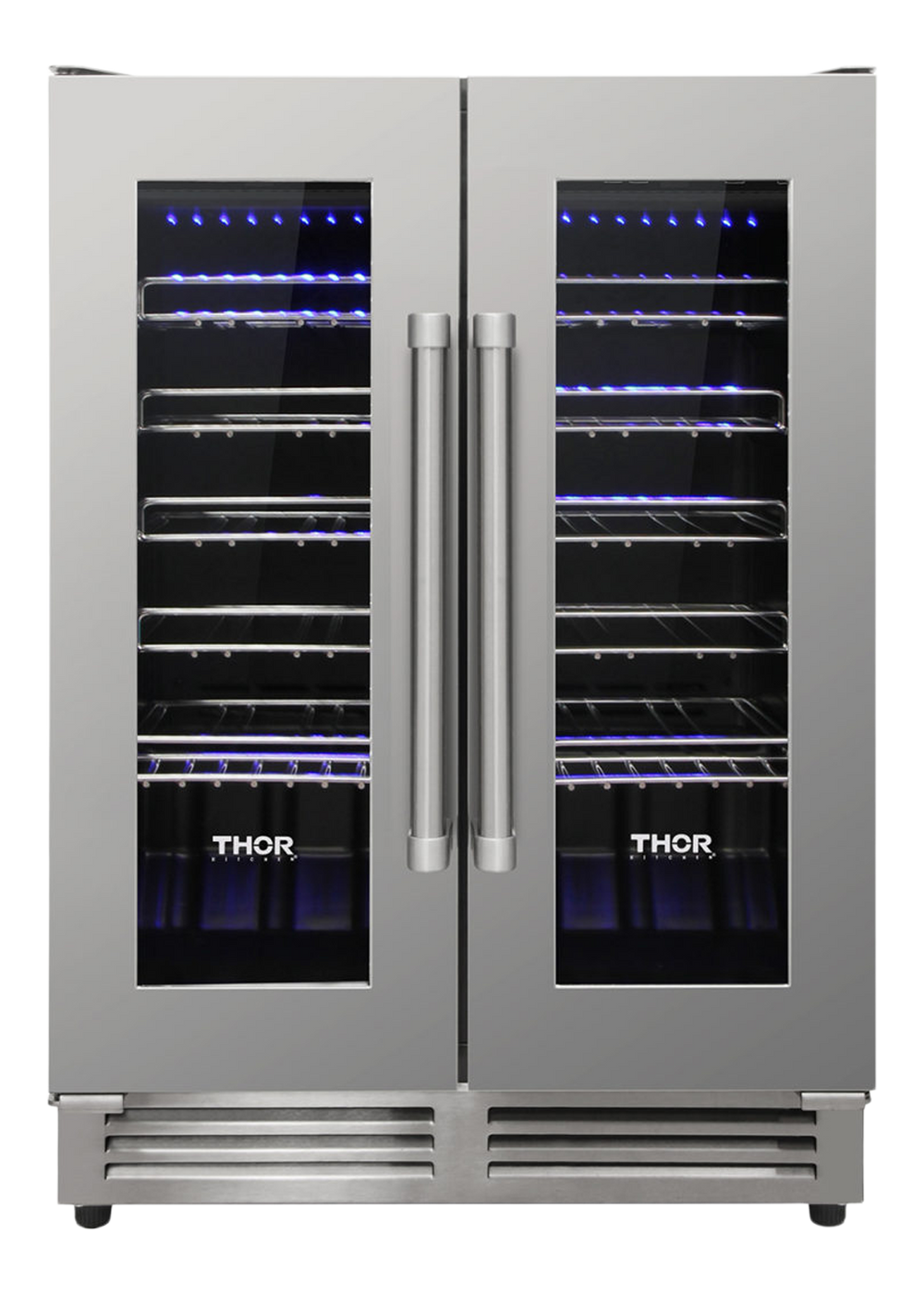
French Door Wine Coolers: These coolers use a dual-door design for easier access and improved organization. This type often includes dual-zone cooling, pull-out racks, interior lighting, air filtration systems, and door alarms. It combines convenience with a premium look and feel.
-
Wine and Beverage Center: These combination units provide dedicated storage for both wine and other beverages within a single appliance. Separate temperature zones allow wines, soft drinks, sparkling water, and other beverages to be stored under appropriate conditions, making them ideal for entertaining spaces and family households.
-
Large-Capacity Compact Wine Coolers: For homeowners whose collections extend beyond a few dozen bottles, larger-capacity compact wine coolers provide expanded storage without requiring a dedicated wine cellar. Some models can accommodate well over 100 bottles while maintaining a standard appliance footprint.
Explore the THOR Kitchen Microwave Drawer
Compact Wine Fridge Size Guide
Selecting the right wine fridge size is an important part of the buying process. While current storage needs are a good starting point, many homeowners find that their wine collections expand over time. Choosing a capacity that accommodates future growth can help maximize long-term value.
Bottle Capacity
The ideal bottle capacity depends on available space, collection size, and how frequently wine is purchased and consumed.
8-12 Bottle Wine Coolers
- Well suited for occasional wine drinkers or households that like to keep a few bottles chilled and ready to serve.
- Commonly available in countertop designs suited for studios, home offices, and compact kitchens.
- A practical solution for households with limited storage needs.
15-24 Bottle Wine Coolers
- A popular choice of apartments, condos, and smaller households.
- Often available in freestanding, built-in, or undercounter configurations.
- Provides enough capacity for a regularly rotating selection of red, white, and sparkling wines.
25-46 Bottle Wine Coolers
- Suitable for regular wine drinkers, frequent entertainers, and growing collections.
- Many models are designed to fit standard undercounter spaces while offering significantly more storage capacity.
- Provides greater flexibility for storing multiple wine varieties without frequent reorganization.
50+ Bottle Wine Coolers
- Designed for dedicated wine enthusiasts and larger collections.
- Commonly installed in spacious kitchens, home bars, dining areas, or entertainment spaces.
- Offers expanded storage capacity while maintaining organized access to a broader range of wines.
Standard Dimensions
Most compact wine fridges are designed to fit common kitchen and bar layouts, making it easier to integrate dedicated wine storage without extensive remodeling.
-
15-inch models: These typically accommodate 15-30 bottles and fit narrower spaces, including smaller kitchens, apartments, home bars, and space-conscious installations.
-
24-inch models: These typically accommodate 30-50+ bottles and provide greater storage capacity.
Other standard measurements include:
-
Height: Most undercounter wine fridges measure approximately 33–35 inches tall to align with standard countertop heights.
-
Depth: Many models have a depth of approximately 23–24 inches, allowing them to sit flush with surrounding cabinetry and countertops.
Ventilation Requirements
It is necessary to verify cutout specifications and ventilation requirements before purchasing to avoid installation issues.
-
Built-in models: These are front-vented and generally require little to no side clearance.
-
Freestanding models: These typically need 3-4 inches of clearance on the sides and rear for proper airflow.
Measurement Aspects Before You Buy
Accurate measurements are essential when selecting a compact wine fridge, particularly for built-in and undercounter installations. Taking the time to verify your available space can help avoid fitment issues and simplify installation.
-
Available Opening Dimensions: Measure the width, height, and depth of the intended installation space to confirm the appliance will fit properly.
-
Manufacturer Cutout Specifications: Always compare your measurements against the manufacturer's recommended cutout dimensions rather than relying solely on the appliance's exterior dimensions.
-
Ventilation Requirements: Built-in and freestanding models may have different ventilation needs. Verify the required clearances to ensure proper airflow and cooling performance.
-
Floor and Surface Levelness: An uneven floor can affect door alignment, cooling efficiency, and overall appliance stability.
-
Electrical Access: Confirm that a properly located electrical outlet is available and that the power cord can reach the connection point without requiring extension cords.
-
Door Swing Clearance: Ensure there is sufficient space for the door to open fully, allowing convenient access to bottles and shelves.
Size Comparison Table
Choosing the right wine fridge often involves balancing storage capacity with available space. The table below compares common size categories to help identify the most appropriate option for your home and wine collection.
| Capacity | Typical Dimensions | Placement | Best For |
|---|---|---|---|
| 8-12 bottles | ~15" W x 20" H | Countertop | Occasional drinkers, studios, home offices |
| 15-24 bottles | ~15" W x 34" H | Undercounter or freestanding | Small households, apartment kitchens |
| 25-46 bottles | ~24" W x 34" H | Under-counter, built-in | Entertainers, growing collections, home bars |
| 50+ bottles | ~24" W x 34"+ H | Dedicated column | Serious collectors, larger kitchens |
Built-In vs. Freestanding Wine Coolers: Which Option Is Right for You?
If you're designing a permanent kitchen layout, built-in models are usually the stronger choice. However, if flexibility matters more, freestanding units may be the obvious choice.
Built-In vs. Freestanding Comparison
| Factor | Built-In | Freestanding |
|---|---|---|
| Installation | Requires cabinetry cutout; fixed position | Plug-in; moveable anytime |
| Ventilation | Front-vented; no side clearance needed | Requires 3-4 inches clearance on sides and back |
| Cost | Typically, higher | More affordable entry points |
| Flexibility | Limited; permanent placement | High; relocation as needed |
| Appearance | Seamless, integrated look | Standalone unit; freestanding profile |
| Best for | Renovations, permanent kitchen setups | Renters, flexible layouts, apartments |
Features to Look for When Buying a Wine Cooler
When comparing compact wine fridges, focus on features that support consistent storage conditions, flexibility, and everyday convenience.
-
Dual-Zone Temperature Control: This feature is suitable for mixed wine collections. These Luxury wine coolers allow separate temperature settings for different storage zones and hence are useful for households that regularly keep both red and white wines on hand. They provide greater serving and storage flexibility than a single-zone model.
-
Digital Temperature Controls: This feature helps maintain temperature accuracy, making it easier to select and monitor specific temperature settings. LED displays offer quick visibility which helps maintain more consistent storage conditions.
-
UV-Protected Glass Doors: This feature is suitable for bright kitchens and open spaces, reducing exposure to ultraviolet light. This allows bottle visibility while offering added protection, which is useful for areas nearby windows.
-
Vibration Reduction Technology: This feature ensures long-term wine storage, which minimizes movement that may disturb sediment in aging wines. This feature supports stable storage environment.
-
Humidity Management: This feature is useful in preserving cork condition, which helps maintain appropriate moisture levels inside the cabinet. This reduces the risk of corks drying out during extended storage.
-
Adjustable Shelving: This feature offers storage flexibility, accommodating different bottle shapes and sizes, which makes it easier to organize a growing collection and optimally utilize storage space.
-
Active Charcoal Filtration: This feature maintains cabinet freshness, reducing unwanted odors inside the wine cooler. Often found in premium wine cooler models, it supports a cleaner storage environment.
-
LED Interior Lighting: This feature enhances visibility and presentation, making it easier to locate bottles without leaving the door open. It adds a refined visual touch to kitchens and home bars.
-
Door Alarm: This feature helps prevent temperature fluctuations. The alarm alerts users if the door remains open for an extended period. It is particularly useful in busy households and entertainment spaces.
-
Reversible Door Design: This feature allows flexible installation of the fridge as the door swing direction can be changed. This simplifies installation in tight spaces, accommodating surrounding cabinetry and room layouts.
-
Energy Efficiency: Less energy consumption directly reduces operating costs while maintaining cooling performance. This is an important consideration for appliances that run continuously.
Wine Storage Basics: Getting the Most from Your Collection
Proper wine storage involves more than simply keeping bottles cool. Temperature stability, humidity control, and appropriate storage duration all play important roles in preserving wine quality.
-
Prioritize Temperature Stability: Consistent storage conditions are often more important than achieving an exact temperature. Frequent temperature fluctuations can accelerate aging and place stress on cork closures as wine expands and contracts. A quality wine cooler helps maintain a stable environment over time.
-
Maintain Appropriate Humidity Levels: For most home collections, humidity is a secondary consideration compared to temperature consistency. However, wines intended for extended storage generally benefit from humidity levels that help prevent natural corks from drying out. Keeping the wine cooler away from direct heat sources and HVAC vents can further support stable storage conditions.
-
Understand Storage Time Expectations: Compact wine fridges are typically designed for short- to medium-term wine storage and everyday enjoyment. They are well suited for preserving wines that will be consumed within the next several months or years. For collectors focused on long-term aging of premium vintages, a dedicated wine cellar or larger wine refrigeration system may provide more specialized storage conditions.
Ideal Wine Storage Temperatures
Different wine styles benefit from different storage temperatures. The table below outlines commonly recommended temperature ranges to help preserve flavor, aroma, structure, and overall drinking quality.
| Wine Type | Ideal Temperature | Why It Matters |
|---|---|---|
| Full-Bodied Reds (Cabernet, Merlot) | 55-60°F (13-16°C) | Helps preserve structure, aroma, and aging potential. |
| Light Reds (Pinot Noir, Gamay) | 55-60°F (13-16°C) | Supports balanced development while preserving delicate aromas. |
| Full-Bodied Whites (Chardonnay) | 50-55°F (10-13°C) | Helps maintain flavor complexity and freshness. |
| Light Whites & Rosé | 45-50°F (7-10°C) | Preserves crispness, acidity, and fruit character. |
| Sparkling & Champagne | 40-45°F (4-7°C) | Helps maintain freshness and carbonation. |
Maintenance and Cleaning Guide
A well-maintained wine cooler can provide years of reliable performance, and most routine maintenance requirements are relatively simple.
Monthly maintenance
- Wipe down interior walls and shelving with a soft cloth and mild, unscented detergent.
- Use a glass cleaner without ammonia on the exterior of the glass door. Avoid spraying directly onto the door seals.
- Check door seals for cracks or gaps that allow cold air to escape.
- Verify temperature accuracy periodically using a separate thermometer, particularly if storing wine for extended periods.
Every Six Months
- Clean the exterior ventilation grilles with a soft brush or vacuum attachment to remove dust buildup.
- Confirm that the unit remains level, as an uneven installation can affect door alignment and cooling performance.
- Inspect and clean accessible condenser coils to help maintain cooling efficiency and support optimal performance.
Signs Your Wine Fridge Needs Service
While routine maintenance can help prevent many issues, certain symptoms may indicate that professional service is required.
-
Temperature is inconsistent despite a stable thermostat setting.
-
Visible condensation on the exterior of the door or cabinet.
-
Door seals that no longer close flush against the cabinet frame.
-
Unusual noise from the compressor, particularly grinding or clicking during normal cycles.
-
Excessive frost buildup inside the cabinet, particularly if the unit is not designed as a frost-free model.
Keep Your Wine Collection Properly Stored in Any Kitchen
Whether you're furnishing an apartment, upgrading a compact kitchen, or adding dedicated beverage storage to your home, the right wine cooler can help preserve wine quality while maximizing available space. THOR Kitchen wine coolers combine precise temperature management, premium stainless-steel construction, and space-efficient designs that integrate seamlessly into modern kitchens, home bars, and entertaining areas. Available in multiple configurations, they provide flexible storage solutions for casual wine enthusiasts and growing collections alike. Explore the THOR Kitchen wine cooler collection today and discover a model that fits your space, complements your lifestyle, and helps keep your favorite wines stored under optimal conditions.
Frequently Asked Questions (FAQs)
-
What size wine fridge is best for an apartment?
A 15- to 24-bottle wine fridge typically offers the best balance of capacity and space efficiency for most apartments. -
How much clearance does a wine fridge need?
Clearance requirements vary by model, so always follow the manufacturer's installation specifications. -
Can I store beer or other beverages in a wine cooler?
Yes. Many owners use wine coolers for beer, sparkling water, and specialty beverages. -
How long do wine fridges typically last?
With proper maintenance, many quality wine coolers provide reliable performance for years. -
Do wine coolers make a lot of noise?
Most modern wine coolers are designed for quiet operation and are suitable for apartments and open-concept spaces. -
What is the ideal temperature for storing wine?
A consistent temperature of approximately 55°F (13°C) is widely recommended for long-term wine storage.