
Complete Gas Range Maintenance Checklist Every Homeowner Should Follow
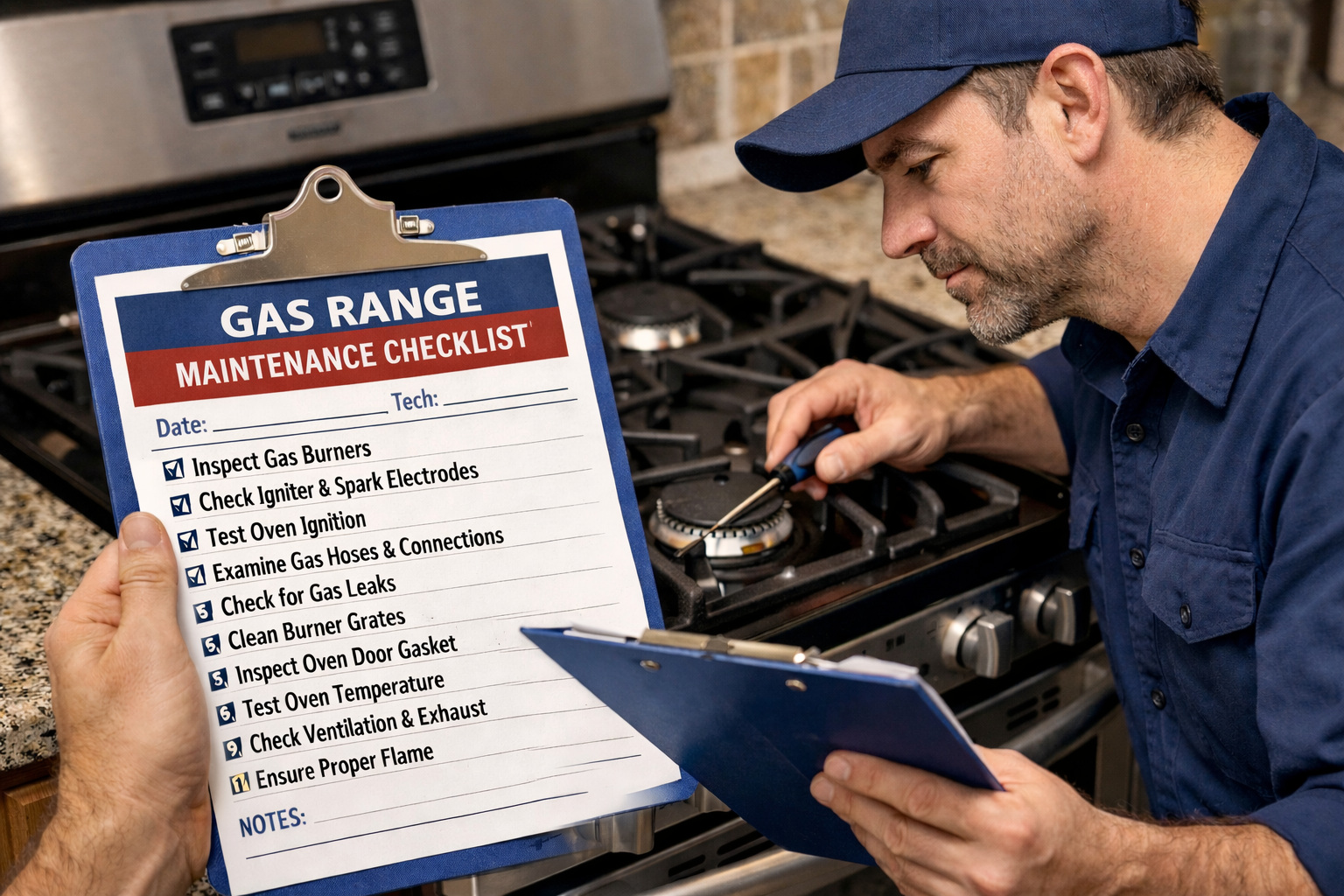
A gas range brings precision, speed, and control into everyday cooking, but it also introduces safety responsibilities that should never be overlooked. Small issues like blocked burners, poor ventilation, or unnoticed gas leaks can affect both performance and household safety over time. Regular maintenance is not about perfection; it is about prevention. Following a comprehensive gas range maintenance checklist helps homeowners reduce risks while keeping their appliance reliable for daily use. In this complete guide on cleaning the gas range, we will cover daily maintenance, weekly deep cleaning, monthly and seasonal safety checks, an annual maintenance checklist for gas ranges, and common gas range problems along with practical solutions.
Daily/After Each Use Maintenance for Your Gas Range
Daily care supports safe cooking and helps prevent minor issues from developing into costly repairs. Simple routines protect finishes, support steady flame output, and make deeper cleaning easier over time. The following habits are key elements in any daily maintenance plan for gas ranges.
- Wipe the stovetop after every use: Wiping the stovetop removes spills before they harden, helping prevent stains and surface damage while keeping your cooking area hygienic and visually clean.
- Clean burner heads lightly: A quick wipe around burner heads clears food residue that can block ports and lead to uneven flames during daily cooking.
- Check knobs and control panels: Inspecting knobs for grease buildup ensures smooth operation and prevents residue from entering internal components over time.
- Observe the flame pattern: A brief daily glance at the flame helps you spot changes early, supporting safer operation and consistent heat output.
Also Read: How to clean a stainless steel stove
Weekly Deep Cleaning for Gas Ranges
Weekly deep cleaning supports both appearance and function by addressing areas that daily care cannot fully cover. The following routine helps extend appliance life and ensures your gas range continues to operate efficiently.
- Deep clean burner heads and grates: Removing grates and soaking burner heads in warm, soapy water helps clear stubborn buildup that can restrict gas flow and reduce cooking performance.
- Clean the oven interior: Wiping grease and food remnants from inside the oven prevents smoke, odors, and heat inconsistency during baking or roasting.
- Scrub the stovetop surface: Gentle scrubbing removes burnt food stains while preserving the finish, helping the range maintain its original look.
- Clean control knobs thoroughly: Detaching and washing knobs removes hidden grease that may affect control accuracy and overall cleanliness.
Monthly and Seasonal Safety Checks
Monthly and seasonal safety checks focus on preventing issues before they affect performance or safety. These inspections help ensure your gas range remains safe during heavy use periods and changing kitchen conditions.
- Inspect the gas line and flame color: Checking for secure connections and a steady blue flame helps confirm safe gas flow and proper combustion.
- Test the igniter system: Ensuring the igniter sparks consistently helps prevent delayed ignition and uneven lighting issues.
- Clean vents and exhaust paths: Clearing ventilation areas supports proper airflow, reduces lingering odors, and helps manage heat effectively.
- Check oven door seals: Inspecting seals helps maintain temperature consistency and improves overall energy efficiency.
Also Read: How to clean gas range top
Annual Maintenance Checklist for Gas Ranges
Annual maintenance focuses on long-term performance and safety. Performing the following steps help identify wear early and ensure your appliance continues to meet daily cooking demands.
- Schedule professional service: An annual inspection by a trained technician helps identify internal issues that may not be visible during routine care.
- Calibrate oven temperature: Checking and adjusting oven temperature ensures accurate cooking results and prevents undercooked or overcooked meals.
- Inspect internal components: Reviewing burners, valves, and connectors helps detect wear that could affect safety or performance.
- Check electrical connections: Ensuring secure wiring supports reliable ignition and consistent control response.
- Review overall system condition: A full system review supports long-term reliability and helps maintain warranty standards.
Common Gas Range Problems and How to Fix Them
Even with regular care, issues may arise. Addressing gas range problems early helps maintain safety and reduces downtime in the kitchen.
- Clicking igniter: Continuous clicking often signals moisture or debris near the igniter. Cleaning and drying the area usually resolves the issue.
- Yellow flame: A yellow flame often indicates clogged burner ports or airflow issues; cleaning burners usually restores proper flame color.
- Smell of gas: If gas odor appears when the stove is off, turn off the supply immediately and contact a professional for inspection.
- Uneven heating: Blocked burner ports or misaligned caps can cause uneven heat. Repositioning and cleaning often fixes the problem.
- Slow Ignition: Delayed ignition can indicate clogged ports or worn igniters; routine cleaning typically improves response time.
Maintain Performance and Safety with Consistent Gas Range Care
Consistent care keeps your gas range reliable, safe, and efficient for everyday cooking. Following a clear maintenance checklist helps prevent issues while supporting long-term performance. THOR Kitchen offers a wide range of durable gas range products built for professional and home cooks who value control, power, and reliability. With proper care, these ranges continue delivering strong performance year after year. For more details, visit our website and explore THOR Kitchen gas ranges designed to support confident cooking in every home.
Freqently Asked Questions
-
Can hard water affect gas range performance?
Yes, mineral deposits can build up on burners and surfaces, regular cleaning helps reduce residue and maintain steady flame output. -
Can food spills cause ignition problems?
Food spills and grease can block burner ports, affecting gas flow and delaying ignition. Regular cleaning keeps burners clear and helps maintain consistent flame performance. -
How do I fix a clicking igniter?
A clicking igniter is often caused by moisture, grease, or food residue near the ignition area. Clean and fully dry the igniter and burner ports to restore normal lighting. -
Why is my gas flame yellow instead of blue?
A yellow flame usually indicates restricted airflow or dirty burner openings. Cleaning the burner ports and ensuring proper ventilation typically brings the flame back to blue. -
Can oven door leaks affect safety?
Loose or worn door seals allow heat to escape, reducing efficiency and stressing internal components. Proper sealing supports consistent temperatures and safer operation. -
Does poor ventilation affect gas range safety?
Yes, blocked or dirty vents can trap heat, smoke, and fumes inside the kitchen. Proper ventilation supports clean combustion and helps prevent excess heat buildup during cooking. -
What maintenance is required for a gas stove?
Gas stove maintenance includes scheduling annual professional servicing, checking gas lines for leaks, inspecting burners, valves, and the pilot light, and cleaning and testing the ignition system. Regular maintenance helps ensure safe operation, consistent performance, and long-term reliability. -
How often should a gas range be serviced?
A gas range should be professionally serviced once a year to maintain safety and optimal efficiency. Annual servicing helps prevent performance issues and reduces the risk of gas-related hazards. Without regular servicing, stove performance may gradually decline over time. -
Can I service my gas stove myself?
In most cases, gas stove servicing should be handled by a certified professional. If local laws or safety regulations require gas-certified technicians to perform repairs, DIY servicing is not permitted. When in doubt, always consult a qualified professional to avoid safety risks. -
What is the correct order for cleaning a gas stove?
The recommended cleaning order for a gas stove starts with checking the manufacturer’s manual for specific instructions. Next, remove the grates, knobs, and burner caps. Prepare a baking soda paste for cleaning, scrub away buildup on the stovetop surface and hard-to-reach areas, and finish by cleaning the inside of the oven if applicable. -
How much does a gas stove service cost?
The cost of a standard gas stove service typically ranges between $100 and $400. Additional repairs or part replacements can increase the total cost. Regular servicing is essential to keep the stove operating safely and efficiently over time. -
What is the average lifespan of a gas stove?
Gas stoves generally last 10 to 15 years, and with proper care, some can function for up to 20 years. Routine maintenance, such as cleaning burners and ensuring a steady blue flame, helps extend the stove’s lifespan and maintain consistent performance. -
What are common gas stovetop cleaning mistakes to avoid?
Common gas stovetop cleaning mistakes include using abrasive sponges or steel wool, cleaning the surface while it is still hot, using glass cleaners on the stovetop, and placing hot lids face-down on a cool surface. Avoiding these habits helps prevent scratches, damage, and surface cracks. -
Do gas stoves need regular servicing?
Yes, regular servicing is essential to keep a gas stove operating safely and efficiently. Most gas stoves should be serviced at least once a year, typically at the end of the burn season or as recommended in the manufacturer’s installation manual.